
 Rewards
How to Design a Rewards Program That Actually Works
A rewards program is easy to launch. A rewards program that customers, employees, dealers or channel partners actually use is much harder. Many businesses ma...
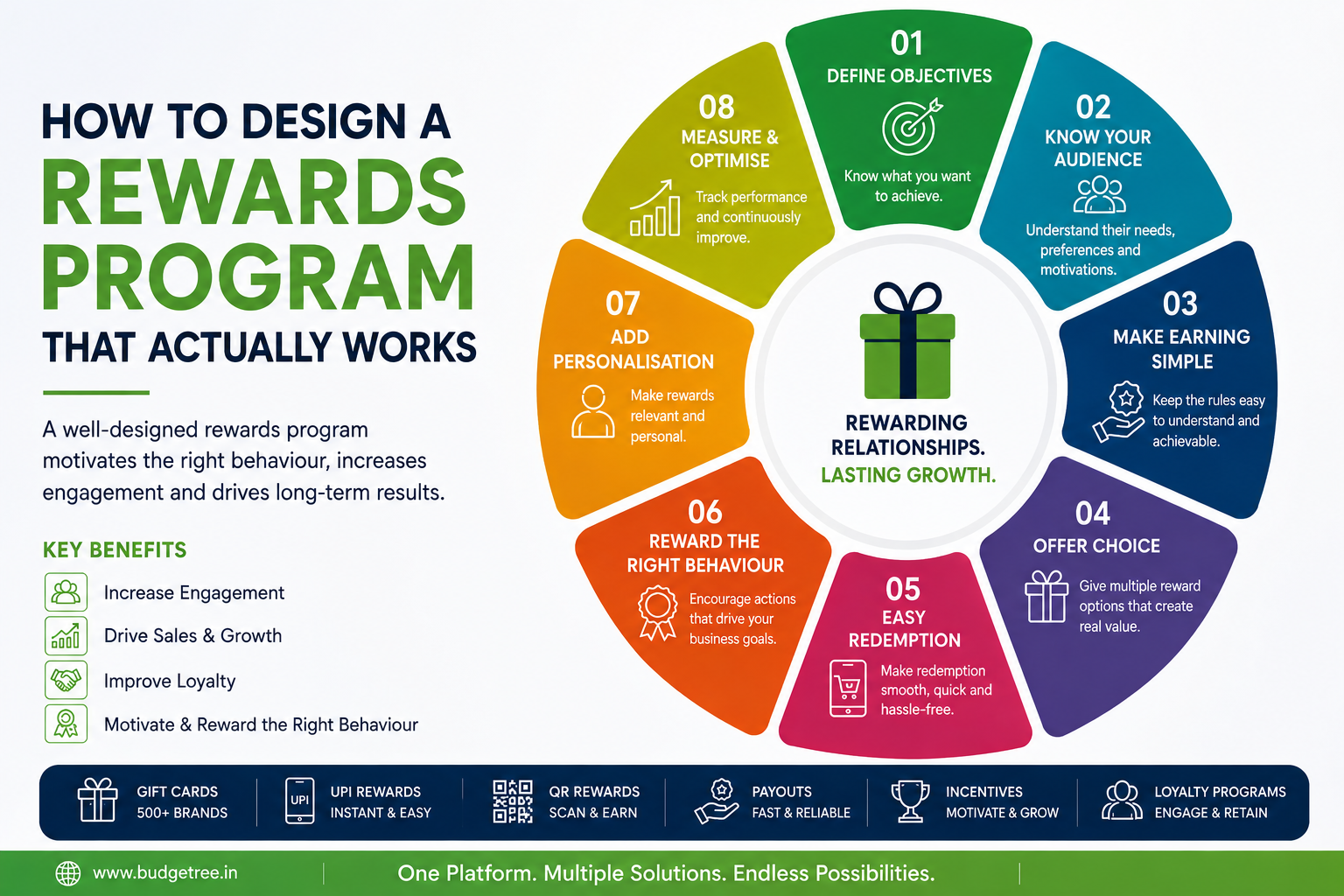
A rewards program is easy to launch. A rewards program that customers, employees, dealers or channel partners actually use is much harder.
Many businesses make the mistake of thinking that simply offering points or discounts is enough. In reality, a successful rewards program needs to be simple, relevant, rewarding, measurable and easy to redeem.
With the right strategy and technology, rewards can become a powerful tool for customer loyalty, employee engagement, dealer incentives and business growth.
1. Start With a Clear Objective
Before selecting rewards, define what the program needs to achieve.
Is the goal to:
Increase sales?
Improve customer retention?
Increase purchase frequency?
Reward dealers and distributors?
Motivate sales teams?
Improve employee engagement?
Promote specific products?
Drive referrals?
Increase digital transactions?
A clear objective helps determine the right reward mechanism.
For example:
Product Sales → Cashback
Dealer Performance → Incentive
Customer Engagement → Points
Employee Achievement → Gift Card
Referral → Instant Reward
2. Know Who You Are Rewarding
A reward program should be designed around the participant.
Different audiences want different rewards.
Customers
Gift cards, cashback, discounts, experiences and lifestyle rewards.
Employees
Gift cards, merchandise, experiences, travel and recognition rewards.
Dealers & Distributors
Cashback, incentives, points, gift cards and performance-based rewards.
Sales Teams
Target-based incentives, instant rewards and milestone benefits.
Understanding the audience helps businesses offer rewards that people actually value.
3. Keep Earning Simple
If participants cannot understand how they earn rewards, engagement will suffer.
A good rewards program should clearly communicate:
What action earns a reward?
How much is earned?
When is it credited?
How can it be redeemed?
For example:
₹1,000 Purchase → Earn 100 Points
or
Buy Eligible Product → Receive ₹100 UPI Cashback
or
Achieve Monthly Target → Unlock SuperGift Reward
The simpler the rule, the easier it is to participate.
4. Give Participants Choice
One reward does not work for everyone.
Instead of restricting participants to one product, brands can provide multiple reward options.
A modern rewards ecosystem can include:
Gift Cards
Merchandise
Cashback
UPI Rewards
Travel
Experiences
Dining
Lifestyle Rewards
Holiday Packages
Choice increases perceived value.
5. Make Redemption Easy
A rewards program can have excellent earning mechanics and still fail if redemption is complicated.
Participants should be able to see:
Balance → Available Rewards → Redemption Options → Reward
Digital redemption, gift cards, UPI rewards and instant reward links can make the experience much smoother.
6. Reward the Right Behaviour
Not every action needs the same reward.
Businesses can create different reward levels for different behaviours.
For example:
First Purchase → Welcome Reward
Repeat Purchase → Loyalty Points
High-Value Purchase → Bonus Reward
Monthly Target → Incentive
Referral → Instant Reward
This creates a structured engagement journey.
7. Use Personalisation
A rewards program becomes more powerful when the reward is relevant to the participant.
Businesses can use customer or partner behaviour to create targeted campaigns around:
Product preferences
Purchase frequency
Location
Transaction value
Previous rewards
Campaign participation
Performance
Instead of sending the same reward to everyone, businesses can create segment-based reward campaigns.
8. Combine Loyalty With Instant Rewards
Traditional loyalty programs often depend entirely on points.
Modern programs can combine multiple reward mechanisms:
Points + Cashback + Gift Cards + UPI Rewards + Experiences
This provides businesses with greater flexibility while giving participants more ways to engage.
9. Add Gamification
Gamification can make a rewards program more engaging.
Businesses can introduce:
Milestones
Leaderboards
Challenges
Streaks
Badges
Tier upgrades
Bonus campaigns
For example:
Complete 5 Purchases → Unlock Bonus Reward
or
Achieve 100% Target → Unlock Premium Reward
The objective is to make participation feel like progress rather than another promotional activity.
10. Measure What Matters
A rewards program should be measured against business outcomes—not just the number of points distributed.
Important metrics include:
Active participants
Repeat purchase rate
Reward redemption rate
Average transaction value
Customer retention
Sales uplift
Campaign participation
Cost per reward
ROI
Customer lifetime value
For dealer and employee programs, businesses can additionally measure target achievement, productivity and engagement.
How Budgetree Helps Build Rewards Programs
Designing the strategy is only one part of the challenge. Businesses also need technology to operate the program at scale.
Budgetree provides an integrated ecosystem for loyalty, rewards, gift cards, incentives, UPI rewards and payouts.
Through its loyalty and rewards solutions, businesses can build programs for:
Customers
Employees
Dealers
Distributors
Retailers
Sales Teams
Channel Partners
Budgetree can support different reward mechanisms including points, gift cards, cashback, UPI rewards, QR-based rewards, merchandise, travel and experiences.
This allows businesses to create a complete journey:
Engage → Earn → Reward → Redeem → Repeat
Build One Ecosystem Instead of Multiple Reward Systems
Businesses often use different vendors for loyalty, gift cards, incentives and payouts.
A connected rewards ecosystem can simplify this.
With Budgetree, businesses can bring together:
Loyalty + Rewards + Gift Cards + Incentives + UPI Rewards + Payouts
This creates a more consistent experience for both the business and the participant.
The Formula for a Successful Rewards Program
A rewards program that actually works should be:
Simple + Relevant + Valuable + Easy to Redeem + Measurable
The goal isn't to give away the most rewards.
The goal is to create the right reward for the right behaviour at the right time.
When technology, reward choice and business objectives work together, a rewards program can become much more than a promotional campaign.
It can become a long-term customer loyalty, employee engagement and channel growth engine.
Ready to Build a Rewards Program?
Create a rewards ecosystem designed around your business objectives with Budgetree.
Explore Budgetree Loyalty & Rewards Solutions
Budgetree — Loyalty | Rewards | Gift Cards | Incentives | Payouts
#RewardsProgram #LoyaltyProgram #CustomerLoyalty #EmployeeRewards #DealerLoyalty #ChannelIncentives #UPIRewards #GiftCards #CorporateRewards #Budgetree
Ready to transform your rewards & engagement program?
See how Budgetree helps teams launch, automate, and measure engagement at scale.
Continue reading
More insights from the Budgetree team

Navratri Incentive Scheme 2026: How to Run a 9-Day Dealer and Sales Scheme People Remember
A Navratri incentive scheme runs 11-19 October. Set simple slabs for dealers and sales teams, announce a big Dussehra prize and get every reward from one partner.
Read more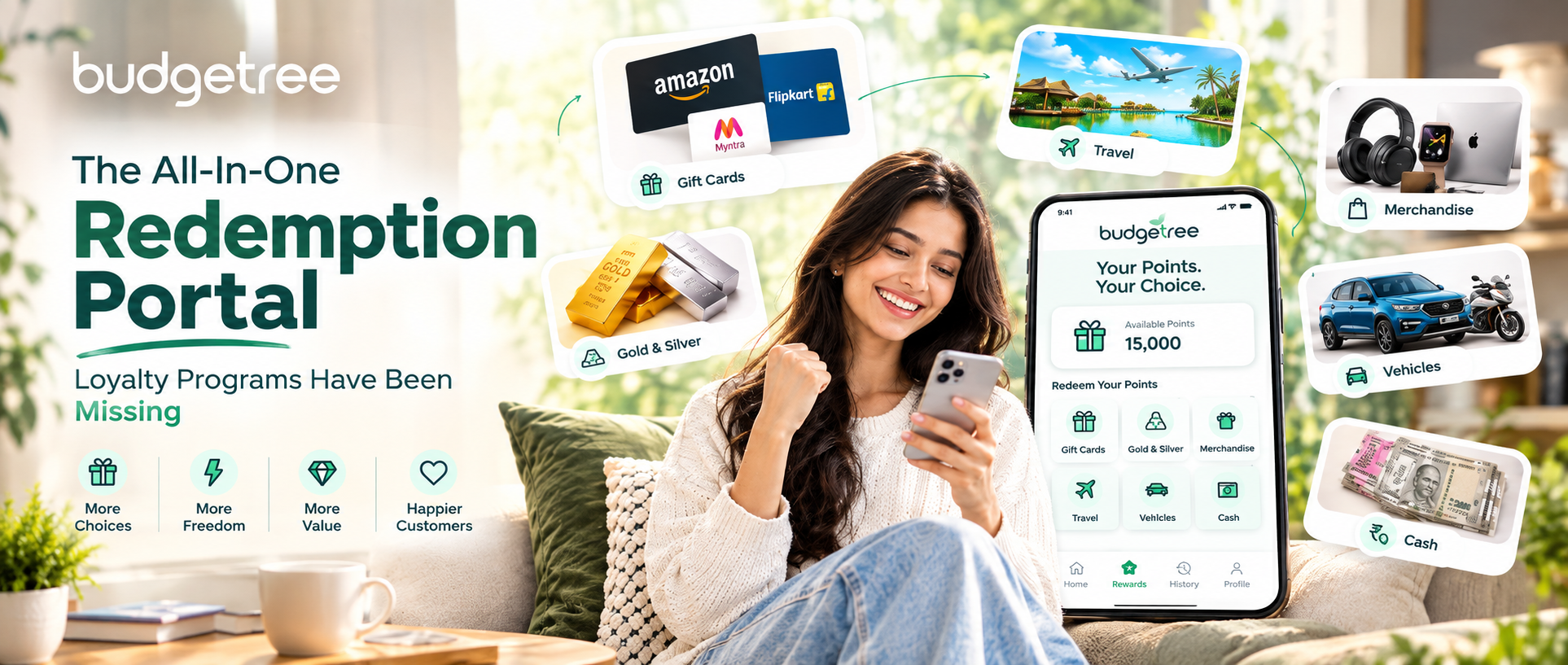
The All-In-One Redemption Portal Loyalty Programs Have Been Missing
Budgetree's Redemption Portal lets loyalty points convert into 350+ gift cards, digital gold and silver, merchandise, vehicles, travel, or direct UPI/DBT bank transfer, all through one simple API or SDK integration.
Read more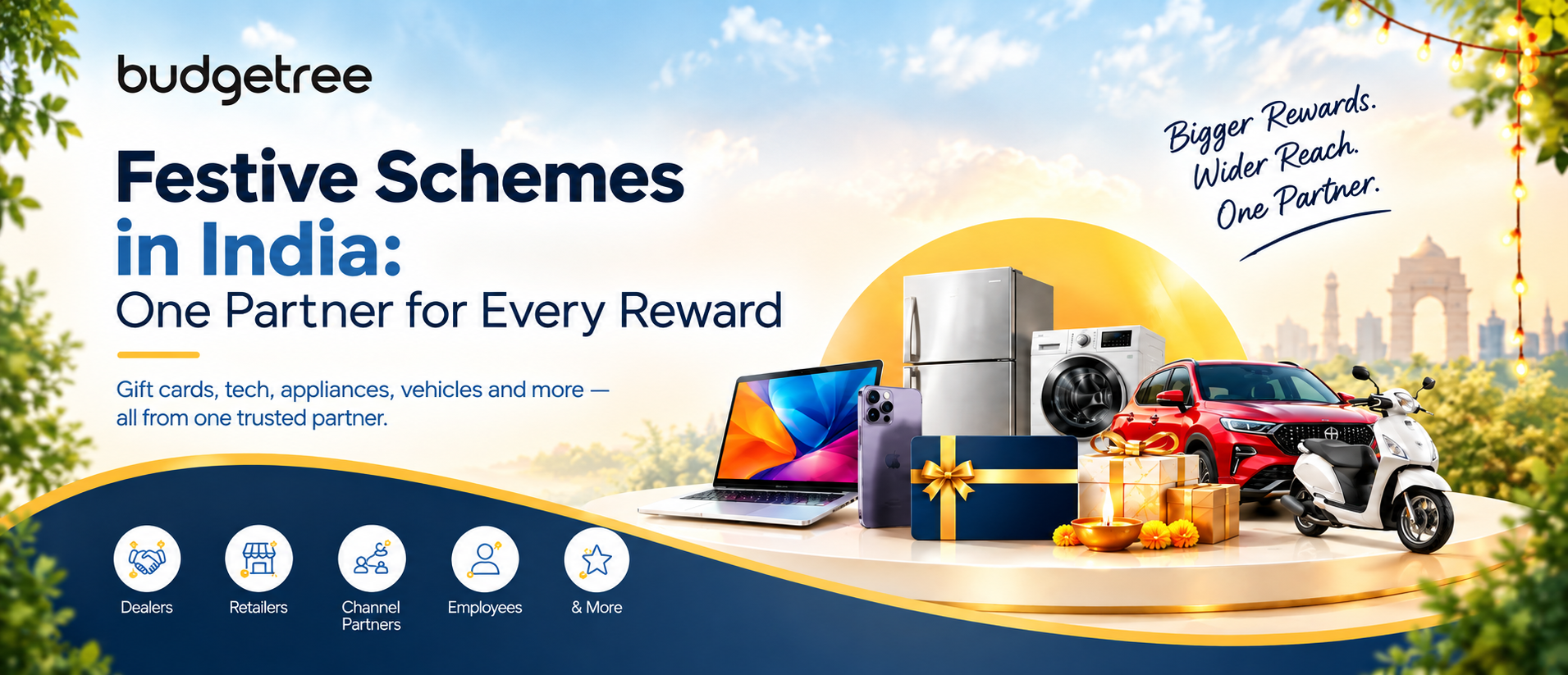
Festive and Incentive Schemes in India: How to Get Every Reward From One Partner
Running a festive or incentive scheme? Get every reward, from 350+ gift cards to appliances, tech and vehicles, from one partner. Here's how to plan the slabs and launch with Budgetree.
Read more