
 Rewards
Enterprise Payouts in India: A Simple Guide | Budgetree
Budgetree helps large businesses automate bulk payouts via UPI, IMPS and NEFT with real-time tracking, easy reconciliation and audit-ready records, all from one platform.
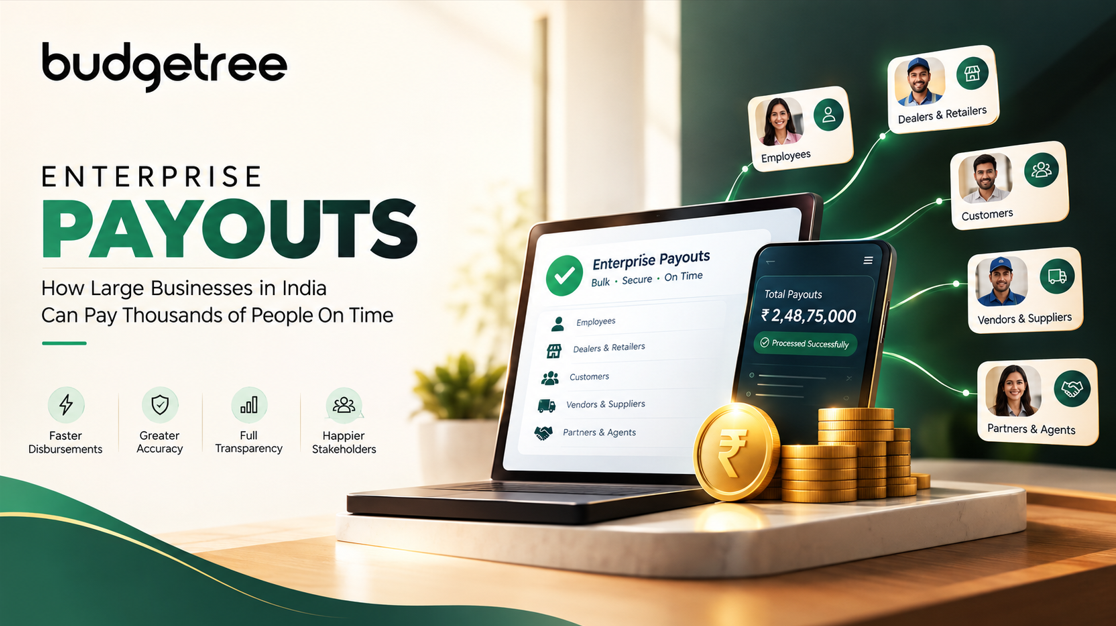
Enterprise Payouts: How Large Businesses in India Can Pay Thousands of People On Time
Enterprise payouts sound like a pure finance topic. But ask anyone who has run a dealer scheme, a cashback campaign or a sales contest at a big company, and they will tell you the same thing. When payouts are slow or wrong, the whole program suffers.
Picture a typical month-end at a large brand. Sales has shared an incentive sheet for 6,000 retailers. HR wants field staff commissions closed by Wednesday. Marketing needs last week’s cashback sent out today. And somewhere in between, three vendors are calling to ask why their invoices are still pending.
The team gets it done, mostly. A few transfers fail. One dealer gets paid twice, another doesn’t get paid at all. Matching everything with the bank statement eats up the next few days, and then the cycle starts again.
Most companies in this position don’t have a money problem. They have a process problem. This article walks through what enterprise payouts involve, why they get harder as you grow, what to look for in a payout solution and how we at Budgetree help large businesses pay people faster and with far fewer errors.
What Are Enterprise Payouts?
Enterprise payouts are the payments a large business sends out on a regular basis to dealers, employees, customers, vendors and partners, usually in high volumes. It could be 500 payments a month or 50,000. What makes it an enterprise payout is the scale, the repetition and the need to keep a proper record of every rupee that goes out.
Paying one supplier is a simple bank transfer. Paying 5,000 retailers their scheme incentive on the same day, making sure each one gets the right amount in the right account and being able to prove it later during an audit, is a very different job.
In most large companies, payouts go to:
• dealers, distributors and retailers (scheme incentives, slab rewards, target bonuses)
• sales and field teams (monthly commissions and incentives)
• customers (cashback, refunds, loyalty rewards)
• agents and referral partners (commissions)
• vendors and suppliers (invoice settlements)
• employees (bonuses and expense reimbursements)
• borrowers, in the case of banks and NBFCs (loan disbursements)
If you want the basics first, we have covered them in what payouts are and how they work for businesses. This post is about what changes once you’re operating at enterprise scale.
UPI, IMPS, NEFT and Other Payout Terms You’ll Hear
A lot of payout conversations get lost in jargon, so here is a quick, plain-English version of the terms that come up most.
UPI is India’s instant payment system. Money reaches the receiver in seconds using just a UPI ID or mobile number, any time of day. It works well for small, frequent payments like retailer rewards and consumer cashback.
IMPS is an instant bank transfer using an account number and IFSC code. It also runs 24x7 and is a good fit when you need speed but the receiver doesn’t use UPI.
NEFT moves money between banks in batches through the day. It’s dependable and widely used for vendor payments and larger settlements. Our post on IMPS vs NEFT vs RTGS goes into limits and charges if you want the detail.
A bulk payout simply means sending many payments together in one run. The beneficiary is whoever receives the money. Reconciliation is the process of matching each payment with your bank statement and books so nothing is missing or duplicated. An audit trail is the record of who uploaded, approved and released a payout, and when. And an API is the connection that lets your CRM or HRMS send payout data straight to a payout platform, so nobody has to retype it. (We’ve explained this one properly in what is a payout API.)
Why Do Payouts Get Harder as a Business Grows?
A spreadsheet and a bank login work fine when you pay 200 people a month. At 20,000, the same setup starts to crack, and it usually happens in a few predictable places.
Volume grows faster than the team
Payout volumes can go up 50 or 100 times as a company expands its dealer network and runs more schemes. The finance team rarely grows at that pace. More volume on the same manual process means more pressure and, sooner or later, more mistakes.
Too many hands on one Excel file
The payout sheet often starts with sales, goes to regional managers for checking, comes back with edits and finally reaches finance for upload. Every round of editing is another chance for a wrong account number, a deleted row or a duplicate entry. With thousands of rows, even a 1% error rate means dozens of people paid incorrectly.
Failed transfers that nobody sees in time
Accounts get closed, IFSC codes change after bank mergers and UPI IDs get typed with one wrong letter. Some payments in every bulk run will bounce. Without live status, the business usually finds out when an annoyed dealer calls the distributor, which can be weeks later.
Reconciliation that drags on
Once the money is out, someone has to tick every payment off against the bank statement and the ledger. Done by hand, that can take days each cycle, and small gaps tend to surface only when the auditors start asking questions.
Scattered approvals and too many tools
Approvals sit in email threads. Bank detail changes are shared on WhatsApp. There’s one tool for UPI, a bank portal for NEFT, another vendor for gift cards and a CRM that holds the actual numbers. Each one solves a small piece, but together they create more manual work, not less.
What Late or Wrong Payouts Really Cost You
It’s easy to treat payout issues as a back-office headache. In reality the damage shows up across the business.
Dealers and retailers lose interest in your schemes when incentives arrive two months late. By then the reward no longer feels connected to the effort, and the next scheme gets a weaker response. Customers who were promised cashback and didn’t get it quickly are more likely to complain or simply stop using the offer. Sales teams notice delayed or incorrect commissions very fast, and it hits morale.
Inside the company, skilled finance people end up spending their week fixing errors instead of doing real financial work. Leadership struggles to get a clear answer on how much was paid out, to whom, and whether a scheme actually delivered results. And when approvals and records are scattered, audits become stressful for everyone involved.
What Should You Look For in an Enterprise Payout Solution?
If we were in your seat evaluating payout platforms, these are the questions we would ask every vendor.
1. Can it handle one urgent payment and a 10,000-row bulk run with the same ease? You will need both, often in the same week.
2. Does it support UPI, IMPS and NEFT, and other options like gift cards? Retailers usually prefer UPI, vendors expect bank transfers and some rewards work better as gift cards.
3. Can I see the status of every payment in real time? Failed payments should show up the moment they fail, not when someone complains.
4. How much of the reconciliation is automatic? Finance should get clean, ready reports instead of matching rows by hand.
5. Can I control who creates, approves and releases payouts? Role-based access protects the business from both errors and misuse.
6. Is every action recorded? A proper audit trail lets you answer any audit question in minutes.
7. Will it connect with our CRM, HRMS or ERP? If the data still has to be exported and uploaded manually, half the problem remains.
8. How is the data protected? Look for strong encryption, secure APIs and continuous monitoring.
9. Does it stay up during peak periods? Diwali, quarter-end and scheme closures bring huge spikes. That is exactly when downtime hurts most.
How Enterprise Payouts Work Across Different Businesses
Payout needs look different depending on the industry and the audience. A few common examples:
Dealer and retailer incentive payouts
Take a building materials brand running a quarterly scheme for 8,000 retailers. Anyone who crosses a set purchase slab earns a cash incentive. For years, the brand issued credit notes that could only be used against future orders, and many retailers didn’t really see them as a reward.
Once the brand switched to direct payouts, eligible retailers started receiving the money in their bank account or UPI ID within days of the quarter closing. The reward finally felt real, and participation in the following schemes went up.
Sales commission payouts
A consumer durables company with 3,000 salespeople calculates incentives in its CRM every month. Earlier, the data was exported, checked region by region and uploaded to the bank over several days. Now it flows straight into the payout platform, managers approve it in one place and the whole team gets paid on the same day, with extra incentives for top performers worked out automatically.
Customer cashback and refunds
A fintech app offering cashback on bill payments can’t afford a week’s delay. Users forget, or worse, stop trusting the offer. With automated UPI payouts, each eligible transaction triggers a credit within minutes.
Agent and referral commissions
An insurance distributor working with thousands of agents pays a commission on every policy sourced. With tiered payout rules, agents who cross their monthly target move to a higher rate automatically, and no one has to calculate it manually.
Vendor payments, reimbursements and loan disbursements
A retail chain settling hundreds of supplier invoices a week, an IT company reimbursing travel bills for employees in several cities and an NBFC crediting approved loans after KYC all have one thing in common. They need payments to go out on time, with a clean record of each one. Bulk transfers, policy checks and automatic reconciliation take care of most of the manual effort.
How Budgetree Handles Enterprise Payouts
Budgetree Payouts was built for companies that pay a lot of people regularly. Bulk bank transfers, UPI payouts, incentives, vendor settlements and cashback all run from one platform, so your team isn’t switching between three or four different tools.
In practice, a payout on Budgetree goes something like this:
1. Payout data comes in from your CRM, HRMS, sales tools or Google Sheets through an integration or API. You can also upload a file if that’s easier.
2. Slabs, tiers and incentive layers are calculated based on the rules you’ve set.
3. Authorized people on your team review and approve the payout.
4. Money goes out through UPI, IMPS or NEFT, or as gift cards where that makes more sense, whether it’s one payment or thousands.
5. You track the status of each payment live, and finance gets detailed reports for reconciliation.
A few things our enterprise clients tend to value most:
• vendor payments, salaries and incentives, cashback, referral commissions, reimbursements and loan disbursements all handled from a single dashboard
• bulk and individual transfers through NEFT, IMPS and UPI
• real-time tracking with transaction-level reports
• automated reconciliation and vendor ledgers, which makes month-end closing much quicker
• rules-based and tiered payouts, so incentive calculations don’t need to be done by hand
• integrations with 30+ tools including CRM, HRMS, sales tools and Google Sheets
• 256-bit encryption, role-based access, audit-ready activity logs and 24/7 monitoring
• 99.99% platform uptime, including during peak season
• API-first onboarding with minimal paperwork, with most clients going live in under 24 hours
Payouts also connect with the rest of our platform. If you run a dealer program on LoyaltyX, employee recognition on RewardX or instant cash rewards through UPI Rewards, the money side of all of it can be managed in one place. Bharat Connect bill payments are available on the same platform as well.
Today, more than 250 enterprise clients across BFSI, retail, consumer goods, automotive and pharma use Budgetree. For one BFSI partner, replacing manual payout cycles with instant UPI and bank payouts and real-time reporting led to 40% faster reward fulfillment.
Manual vs Automated Payouts: What Actually Changes?
With a manual process, data gets copied between spreadsheets, files are uploaded to bank portals one batch at a time and failed transfers are usually discovered through complaints. Reconciliation takes days, approvals live in email and leadership waits for someone to put together a report.
With automated payouts, data comes in directly from your systems and thousands of payments go out in a single run. Failures are visible straight away and can be corrected on the spot. Reports are ready as soon as the payout is done, every action is logged for audits and the dashboard shows exactly what was paid, to whom and when.
The biggest change, honestly, is time. Teams that used to spend the first week of every month on payouts get most of that week back.
How to Move From Manual to Automated Payouts
This doesn’t have to be a big, risky project. Most companies we work with follow roughly these steps.
1. Make a list of every payout you run today, how often it happens, who starts it and where the data comes from.
2. Pick the area that hurts the most, whether that’s failed transfers, slow approvals, reconciliation or audit gaps, and start there.
3. Agree on approval rules: who creates, who approves and who releases each type of payout.
4. Connect your data sources so incentive and payment data doesn’t have to be typed in again.
5. Choose a payout mode for each audience, for example UPI for retailers and consumers and bank transfers for vendors.
6. Run a pilot with one payout type or one region, check the results and then expand.
7. Review the numbers every cycle, such as success rate, turnaround time and cost, and adjust your rules as you go.
A Typical Before-and-After
Let’s take a national FMCG brand paying monthly scheme incentives to 12,000 retailers.
Before automation, the sales team prepared the data in Excel, regional teams verified it and finance uploaded files to two different bank portals over three days. A few hundred payments would fail every month and get fixed by hand over the following two weeks. In the meantime, retailers kept calling their distributors asking where their money was.
After moving to an automated setup, incentive data flows from the CRM into the payout platform, regional heads approve on a dashboard and payments go out by UPI and IMPS on the same day. Failed transfers are flagged immediately and resent once the details are corrected. Finance downloads a ready report that evening, and retailers get paid while the scheme is still fresh in their minds.
A Few Practical Tips From Our Side
Keep beneficiary data clean. A large share of failed payments comes down to outdated bank or UPI details, so it’s worth asking dealers and agents to update them regularly.
Tell people when to expect their money. A simple message with the payout date cuts down follow-up calls and builds trust.
Pay as close to the achievement as you can. An incentive paid a week after the target is hit has far more impact than one paid two months later.
Match the payout mode to the amount. UPI works well for small, frequent rewards, while bank transfers suit larger settlements.
Finally, look at your payout reports every cycle. If the same failures keep showing up, fix the root cause rather than just resending payments.
Enterprise Payouts: Frequently Asked Questions
What is an enterprise payout platform?
It’s software that lets a large business send high volumes of payments to employees, partners, vendors and customers, with approvals, live tracking and reconciliation built in.
How is a payout platform different from my bank’s bulk upload?
A bank bulk upload only moves money. A payout platform also pulls data from your systems, supports different payout modes, manages approvals, shows real-time status, handles failures and gives you reports ready for reconciliation.
Which payout modes does Budgetree support?
UPI, IMPS and NEFT, along with gift cards where they suit the audience. Bharat Connect bill payments are also available.
Can Budgetree process thousands of payouts at once?
Yes. You can send one payment or thousands in a single run and track each one live.
What happens if a payment fails?
It shows up on the dashboard straight away, so your team can correct the details and resend it without waiting for a complaint.
Does Budgetree integrate with our CRM or HRMS?
Yes. Budgetree is API-first and connects with 30+ tools, including CRM, HRMS, sales tools and Google Sheets.
How secure are payouts on Budgetree?
Data is protected with 256-bit encryption in transit and at rest, along with role-based access, audit-ready logs and round-the-clock monitoring.
How long does it take to get started?
Most clients go live in under 24 hours with guided onboarding. Larger setups with custom integrations can take a little longer depending on scope.
Are automated payouts only useful for very large companies?
The biggest gains come for businesses with large dealer, partner, customer or employee networks, but any growing company that wants to cut manual errors will see a difference.
Can payouts be linked to our loyalty or incentive program?
Yes. Budgetree Payouts works with LoyaltyX, RewardX and UPI Rewards, so rewards and the payments behind them run from the same platform.
To Sum It Up
For a large business, getting payouts right is about more than finance. When dealers, salespeople, customers and vendors are paid correctly and on time, they trust you more, and that shows up in sales and loyalty. When payments are late or wrong, even a well-designed scheme loses its value.
Manual processes simply weren’t built for the volumes most enterprises handle today. Automating payouts gives your team speed, accuracy and a clear view of every rupee going out.
If you’d like to see how this could work for your business, book a demo or write to us at sales@budgetree.in.
Ready to transform your rewards & engagement program?
See how Budgetree helps teams launch, automate, and measure engagement at scale.
Continue reading
More insights from the Budgetree team
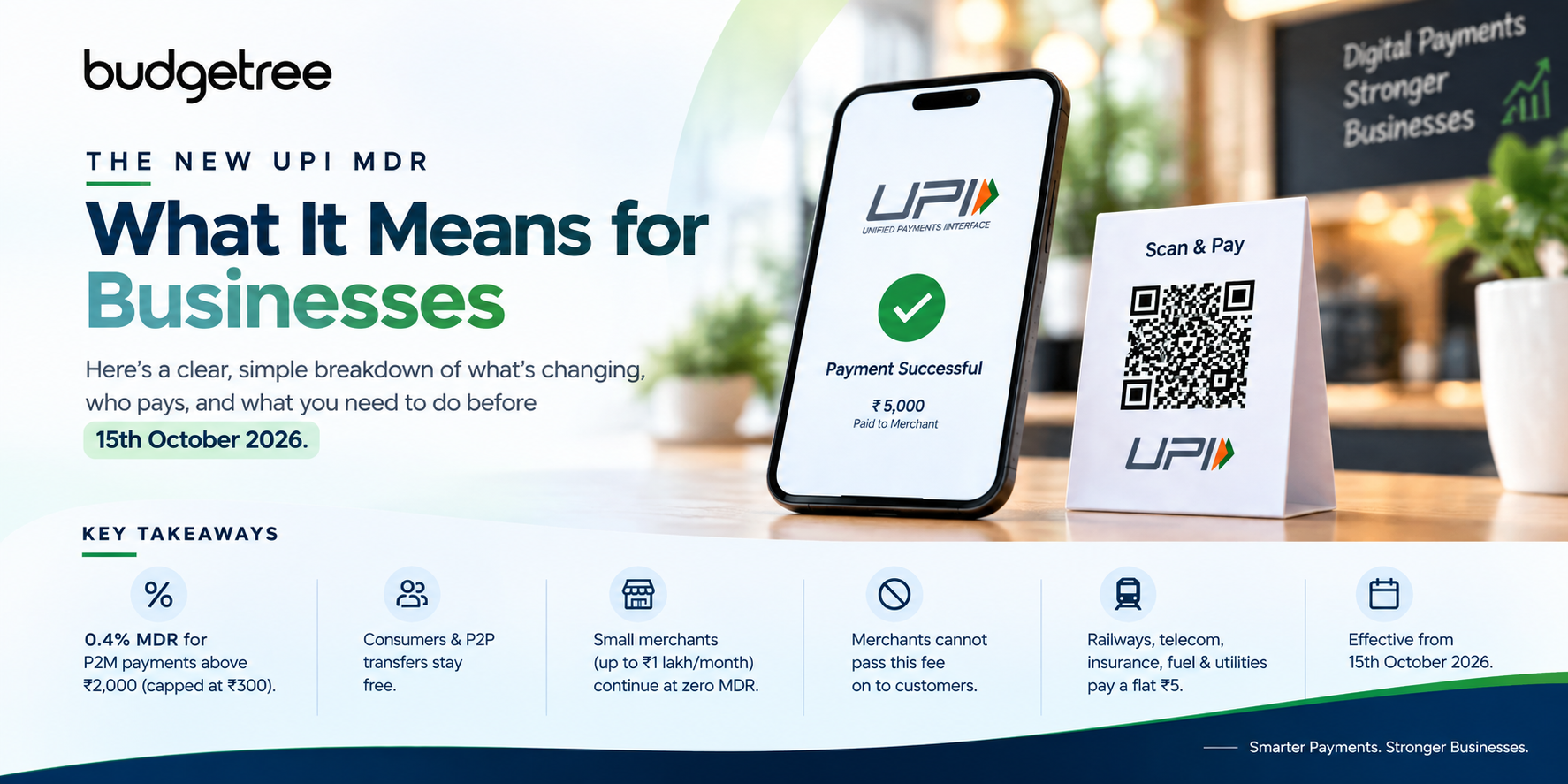
UPI MDR 2026 Explained: The Complete Guide for Merchants and Businesses
NPCI's new 0.4% UPI MDR takes effect 15 October 2026 on merchant payments above ₹2,000, capped at ₹300. Consumers and small merchants stay exempt - here's what businesses must know before the deadline.
Read more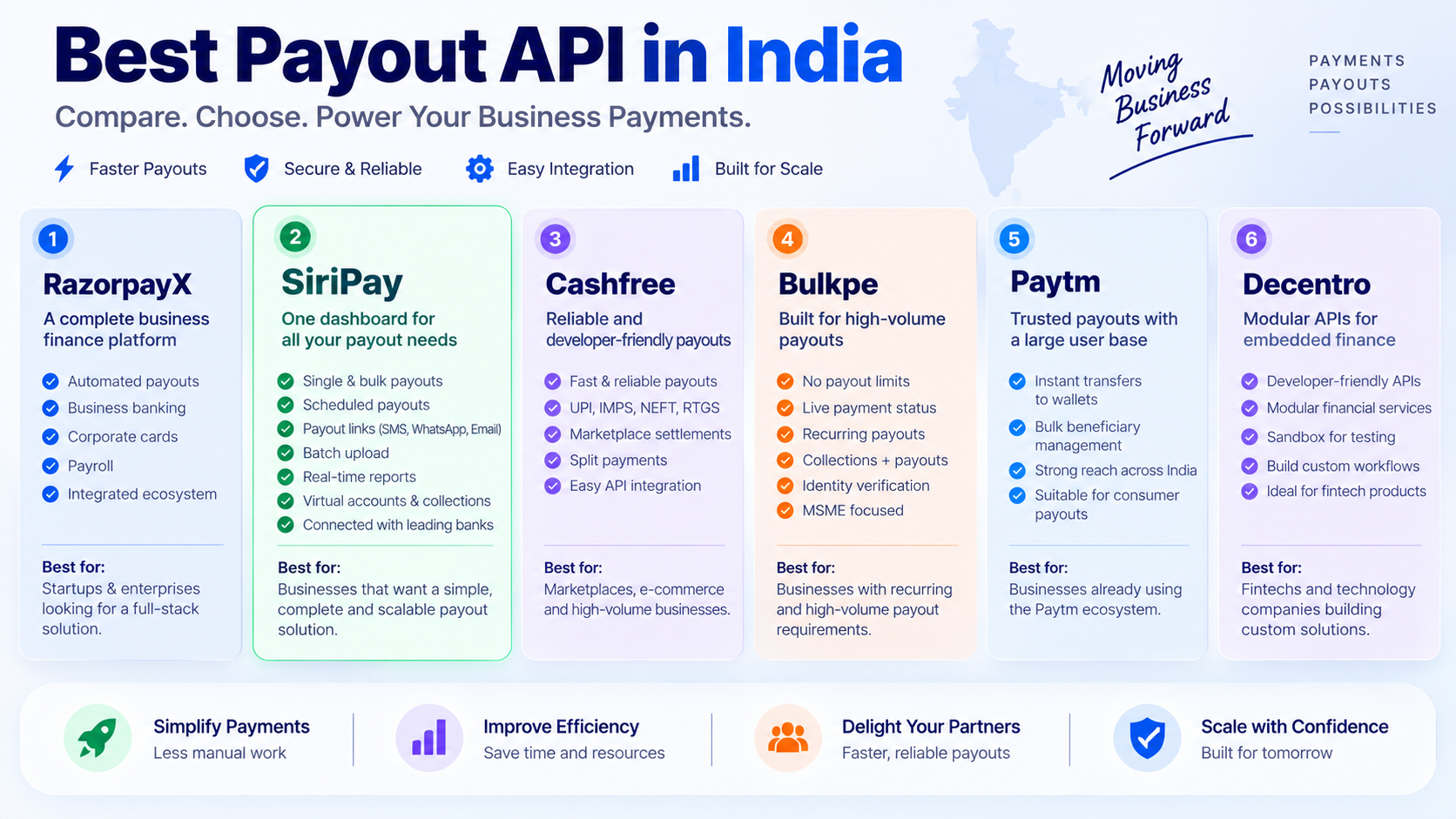
Best Payout APIs in India: RazorpayX, SiriPay, Cashfree, Bulkpe, Paytm & Decentro
Over the last few years, businesses in India have moved from manual payments to automated payouts. For NBFCs, marketplaces, logistics companies, e-commerce bu...
Read more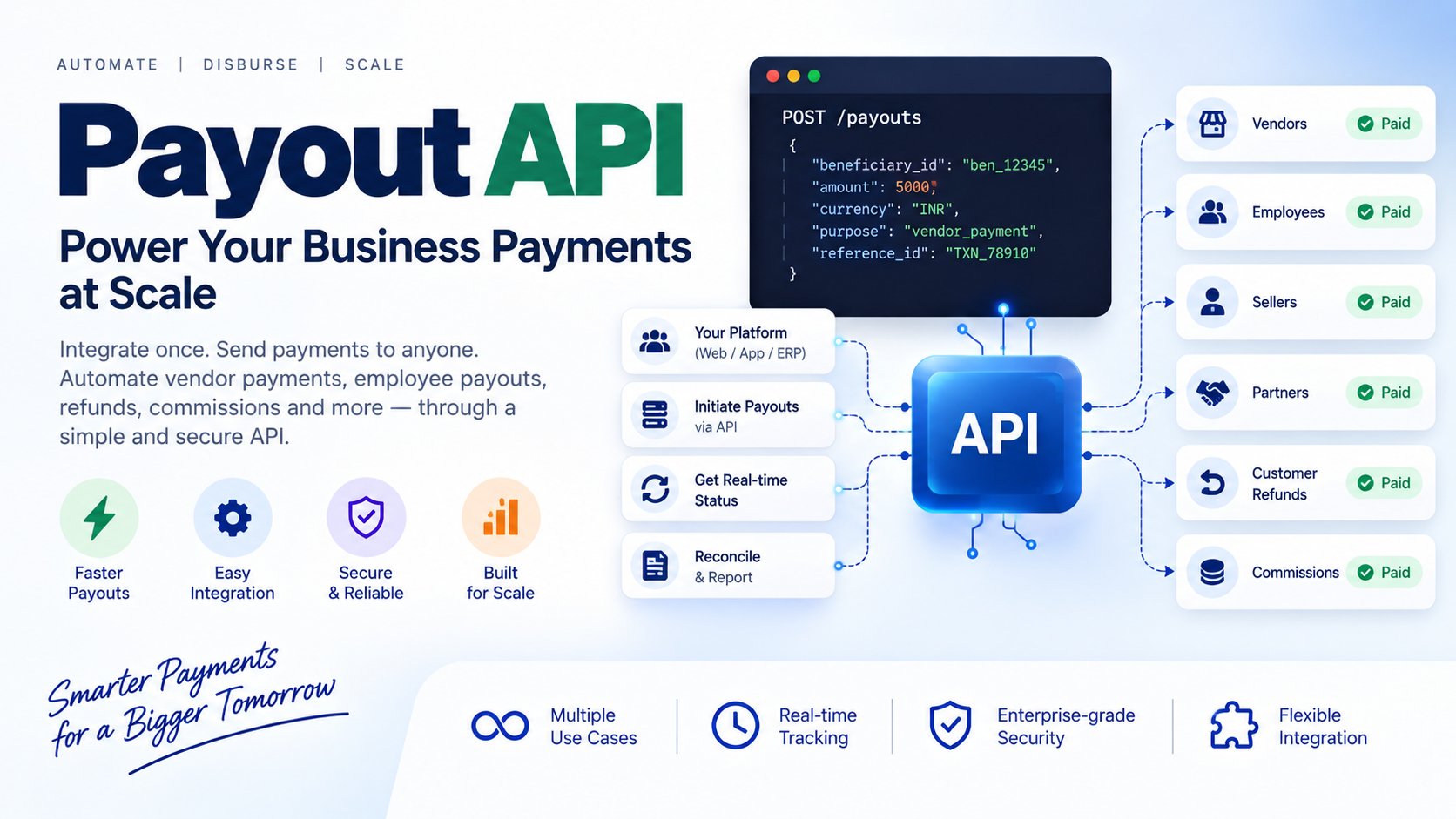
What Is a Payout API?
A Payout API (Application Programming Interface) allows a business application to communicate with a payment or banking system and initiate payouts electronic...
Read more