
 Rewards
UPI MDR 2026 Explained: The Complete Guide for Merchants and Businesses
NPCI's new 0.4% UPI MDR takes effect 15 October 2026 on merchant payments above ₹2,000, capped at ₹300. Consumers and small merchants stay exempt - here's what businesses must know before the deadline.
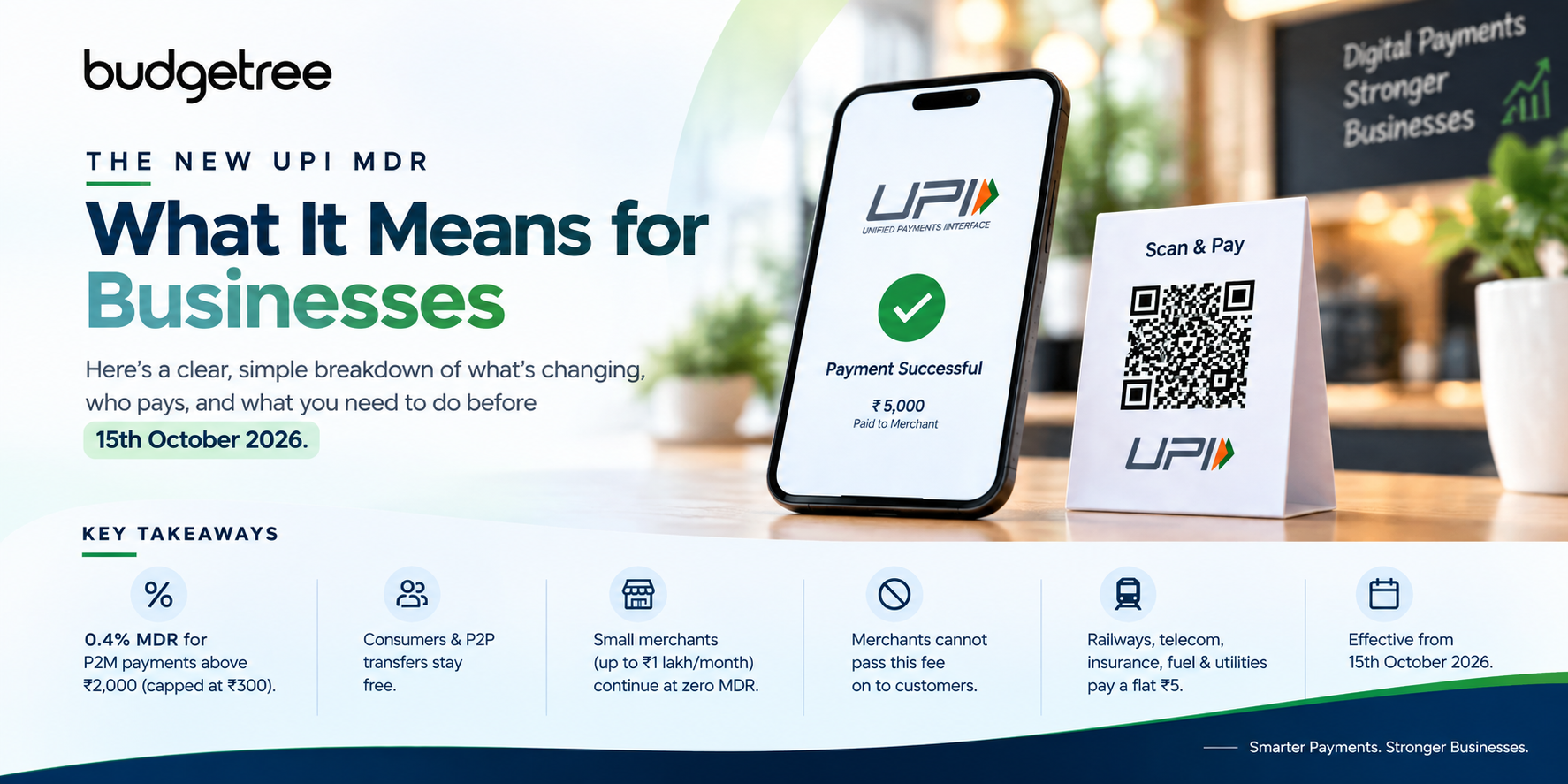
Fourteen years after UPI processed its first rupee, NPCI has finally put a price tag on part of it. Starting 15th October 2026, a Merchant Discount Rate (MDR) applies to a defined slice of UPI transactions - and depending on which side of the counter your business sits on, that's either a rounding error or a genuine line item in next year's budget.
If you run a business that accepts UPI payments, disburses UPI-based rewards, or manages a dealer or vendor network paid through UPI, this guide breaks down exactly what's changing, who actually foots the bill, and what to do before the deadline.
Key Takeaways
✓ A 0.4% MDR applies to UPI Person-to-Merchant (P2M) payments above ₹2,000, capped at ₹300 for transactions of ₹75,000 and above.
✓ Consumers and P2P transfers stay completely free - this is a merchant-side cost only.
✓ Small merchants (P2PM, up to ₹1 lakh/month via UPI QR) continue at zero MDR.
✓ Merchants are barred from passing this fee on to customers.
✓ Railways, telecom, insurance, fuel and utilities pay a flat ₹5 instead of 0.4%.
✓ The rule takes effect 15th October 2026.
What Is MDR (Merchant Discount Rate)?
The Merchant Discount Rate, or MDR, is the fee a merchant pays their bank or payment service provider for accepting a digital payment. It's usually a small percentage of the transaction value, deducted before the money is settled into the merchant's account - which means it's a cost borne by the business accepting the payment, not the customer making it.
MDR isn't new or unique to UPI. It already applies to every credit card, debit card and digital wallet transaction in India, and it's how banks and payment networks fund the infrastructure, fraud protection and settlement systems that make instant digital payments possible in the first place. What made UPI different, until now, was that this fee sat at zero - one of the biggest reasons it overtook cards and cash as India's default payment method within a few years of launch.
Why It's Important to Know About MDR?
For any business that accepts digital payments, MDR is not a footnote - it's a direct deduction from revenue, applied automatically at settlement rather than negotiated case by case. A merchant who doesn't track it closely can find it quietly eating into margins over time, especially in high-volume or high-ticket categories where even a fraction of a percent adds up.
Understanding how MDR works also shapes decisions well beyond bookkeeping: how you price products, which payment partner or aggregator you choose, how you structure settlement and reconciliation, and how you forecast cash flow when a portion of every sale is deducted before it reaches your account. With UPI now entering this framework, businesses that have never had to think about MDR before are, for the first time, in the same planning conversation as every merchant who has long accepted cards.
Why NPCI Is Introducing a UPI MDR Now?
UPI's free-for-everyone model was never actually free to run. Industry estimates put the annual cost of keeping UPI's infrastructure alive - servers, fraud detection, bank integrations, cybersecurity - at close to ₹20,000 crore. That bill has historically been covered by government subsidies designed as short-term bridge funding, not a permanent arrangement.
With UPI processing 2,451 crore transactions worth ₹29.9 lakh crore in August 2026 alone, NPCI's position is that a purely subsidy-funded model cannot keep scaling indefinitely. The new MDR shifts part of that cost onto the transactions best positioned to absorb it - larger merchant payments - while keeping every day, small-ticket UPI use free.
Whichever way you view the reasoning, the practical takeaway is simple: this is a merchant-economics story, not a consumer-pricing one, and it's worth understanding on those terms.
The New UPI MDR Structure, at a Glance
Below ₹2,000: No MDR at all. This band alone accounts for more than 95% of total UPI P2M volume.
₹2,000 to ₹75,000: A flat 0.4% of the transaction value.
₹75,000 and above: Capped at a flat ₹300 per transaction, however large the payment.
For perspective, credit cards typically charge merchants 1.5% to 2.5% per transaction, and debit cards up to 0.90%. Even after this change, UPI remains the cheapest digital acceptance channel available to Indian businesses by a wide margin.
Who Actually Pays the New UPI MDR?
Consumers: Still Zero Cost, Always
Whether you're paying a shopkeeper, splitting a dinner bill, or scanning a QR code at a tea stall, there is no charge to you as a payer. P2P transfers - to friends, family, or between your own linked accounts - remain entirely free, and UPI apps are explicitly barred from introducing a platform fee to recover the difference.
Small Merchants (P2PM): Protected by Design
If you're a small vendor receiving payments into a personal account under the P2PM classification - broadly, up to ₹1 lakh a month through UPI QR - you continue at zero MDR. Existing QR codes and soundboxes keep working exactly as they do today, with no re-registration required. Only after three consecutive months above ₹1 lakh does an account graduate into the standard P2M category.
Established and Larger Merchants: The 0.4% Applies
This is the segment the new rate actually targets - retail chains, e-commerce platforms, brands and larger service businesses. Crucially, the rules explicitly prohibit passing this cost on to customers at checkout. The MDR is deducted by the acquiring bank on the merchant side; it is not a line item you can add to a bill or invoice.
Specialised Sectors: A Flat ₹5 Instead
Railways, telecom, insurance, fuel and utility bill payments above ₹2,000 attract a flat ₹5 per transaction rather than the 0.4% rate - a deliberate move to protect thin-margin, high-frequency sectors. Capital market transactions (mutual funds, broker payments, securities) sit lower still, at 0.02%, capped at ₹300.
How Much Will You Actually Pay? A Real-World Example
Numbers land better with context. Picture a mid-sized apparel or FMCG brand processing 3,000 UPI transactions a month at an average ticket size of ₹4,500 - a fairly typical retail profile.
Monthly UPI revenue: ₹1,35,00,000
MDR at 0.4%: ₹54,000 per month
Annualized cost: roughly ₹6.48 lakh per year
For a business of that size, that's a real number worth planning for - but it's also a number that's entirely predictable, and one that scales down automatically for lower-ticket, higher-frequency businesses. Here's how the maths works across different transaction sizes:
₹2,000 transaction: No MDR applicable - merchant pays ₹0
₹3,000 transaction: MDR of 0.40% - merchant pays ₹12
₹50,000 transaction: MDR of 0.40% - merchant pays ₹200
₹75,000 and above: Flat rate applies - merchant pays ₹300
The takeaway: even on a ₹1,00,000 sale, the fee never climbs past ₹300 - the cap exists specifically to keep high-ticket transactions predictable.
Beyond the Fee: The Operational Impact
The rupee cost is only part of the story. Businesses that accept UPI at scale should also expect this to touch three practical areas:
Reconciliation and reporting. Finance teams will need to separate MDR-bearing collections from exempt transactions - P2PM inflows, sub-₹2,000 payments, and flat-rate sector payments - inside existing settlement reports.
Aggregator and PSP conversations. If you route UPI collections through a payment aggregator, confirm how the MDR will be reflected in your settlement statements and whether their own service fees sit on top of it.
Margin planning, not price planning. Since the cost cannot be passed to customers, it has to be absorbed into operating margins - which makes this a finance and category-planning conversation, not a pricing one.
Budgetree's Perspective: Collections and Disbursements Are Not the Same Conversation
Here's a distinction that's easy to lose in the broader coverage: this MDR governs P2M collections - a customer paying a merchant for goods or services. It says nothing about a business disbursing money outward. Cashback, reward payouts, dealer incentives and employee recognition sent through UPI Rewards, RewardX, LoyaltyX and SiriPay sit on the opposite side of the transaction - funds moving from a business account to an individual beneficiary, not a customer paying for a purchase.
NPCI's notification doesn't address payout or disbursement flows directly, so if a meaningful share of your UPI activity sits on the payout side rather than the collection side, it's worth a quick confirmation with your bank or payment aggregator on how those specific flows are classified. What we can say with confidence: nothing in this notification changes how Budgetree's reward and payout infrastructure works for your business today.
This is also, in our view, exactly why it pays to treat collections and disbursements as two separate cost centres rather than one undifferentiated "UPI spend" line - because regulation, as this update shows, increasingly treats them differently too.
Your Pre-15th-October Checklist
Check your merchant category. If you collect customer payments via UPI QR and regularly cross ₹2,000 per transaction, model the 0.4% / ₹300 impact into your margins now, not after the deadline.
Leave your pricing alone. Passing MDR on to customers isn't permitted - build it into operating costs, not shelf prices.
Separate collections from payouts in your reporting. If finance currently tracks all UPI activity as one-line, split money coming in from customers from money going out to customers, dealers or employees.
Watch the small-merchant threshold. If you or your dealer network sits close to the ₹1 lakh/month P2PM ceiling, three consecutive months over it moves the account into MDR territory.
Confirm your aggregator's implementation. Ask your bank or PSP exactly how the MDR will appear on your settlement statements from 15th October onward.
Frequently Asked Questions?
Does the UPI MDR apply to P2P transfers?
No. Transfers between individuals - to family, friends, or your own linked accounts - remain completely free, with no change under this policy.
Will I be charged for paying a small local vendor via UPI QR?
No. Small vendors classified under P2PM (receiving up to ₹1 lakh per month) continue at zero MDR, and there is no charge to you as the customer either way.
Can a merchant add the MDR to my bill?
No. Merchants are explicitly barred from passing this cost on to customers. You continue paying the exact listed price.
Does this affect Budgetree's UPI Rewards or SiriPay payouts?
This notification governs merchant collections (P2M), not business-to-individual disbursements. Budgetree's reward and payout infrastructure is unaffected by this update.
When exactly does the new MDR take effect?
15th October 2026. The finalized framework gives acquiring banks, aggregators and fintech platform a lead-in period to update their systems.
Ready to Future-Proof Your Rewards and Payout Strategy?
Regulatory shifts like this are exactly why Budgetree built its payout and rewards infrastructure - RewardX, LoyaltyX, UPI Rewards and SiriPay - as a layer that sits above the raw payment rails rather than bolted onto them. When NPCI or RBI update the rules, that infrastructure absorbs the compliance overhead, so your loyalty programs, dealer incentives and employee rewards keep running without a scramble on your end.
If you're re-evaluating your UPI cost structure this quarter - on the collection side or the payout side - book a demo with our team or reach out directly at sales@budgetree.in / +91 9193911100.
Ready to transform your rewards & engagement program?
See how Budgetree helps teams launch, automate, and measure engagement at scale.
Continue reading
More insights from the Budgetree team
Enterprise Payouts in India: A Simple Guide | Budgetree
Budgetree helps large businesses automate bulk payouts via UPI, IMPS and NEFT with real-time tracking, easy reconciliation and audit-ready records, all from one platform.
Read more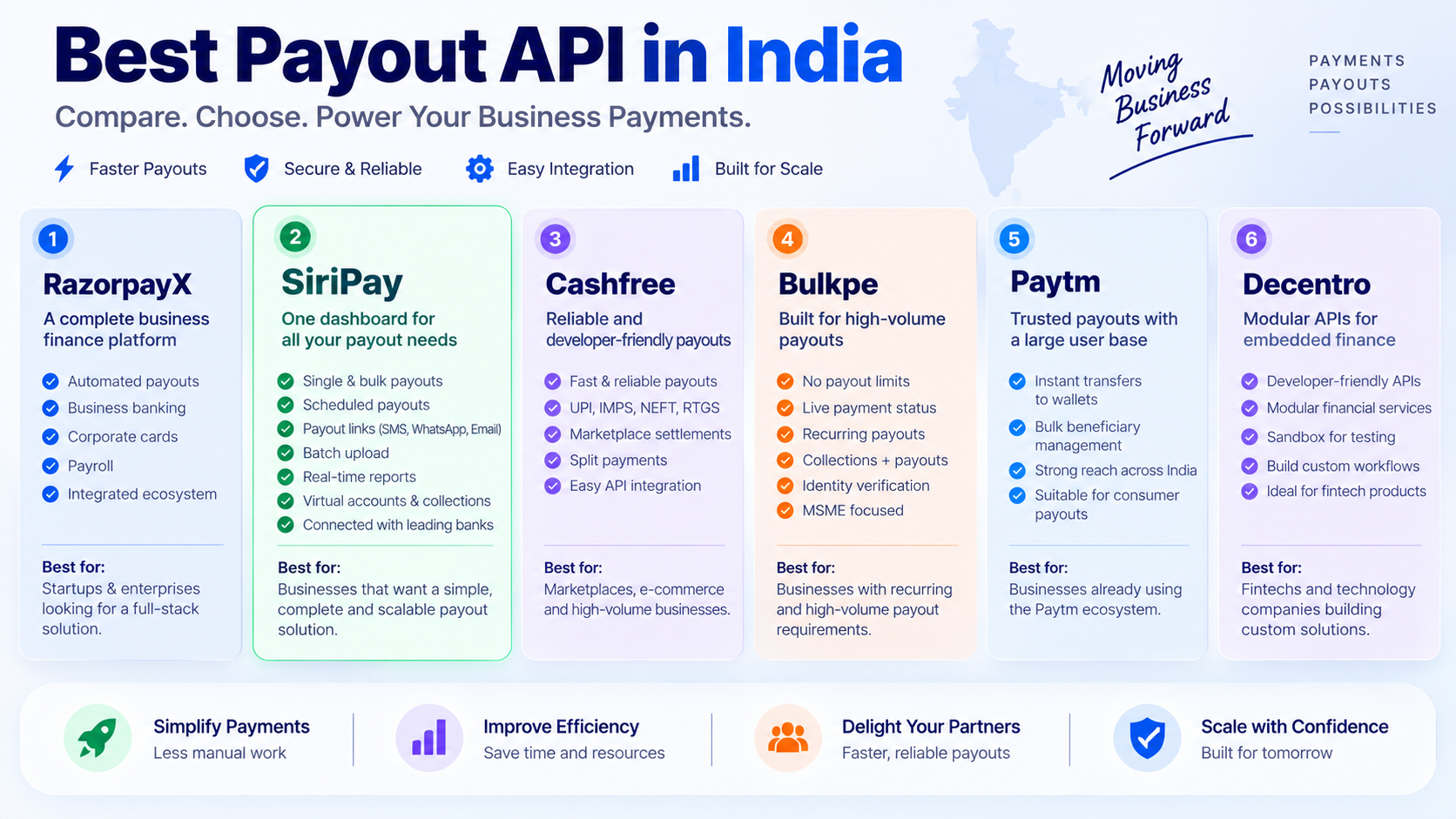
Best Payout APIs in India: RazorpayX, SiriPay, Cashfree, Bulkpe, Paytm & Decentro
Over the last few years, businesses in India have moved from manual payments to automated payouts. For NBFCs, marketplaces, logistics companies, e-commerce bu...
Read more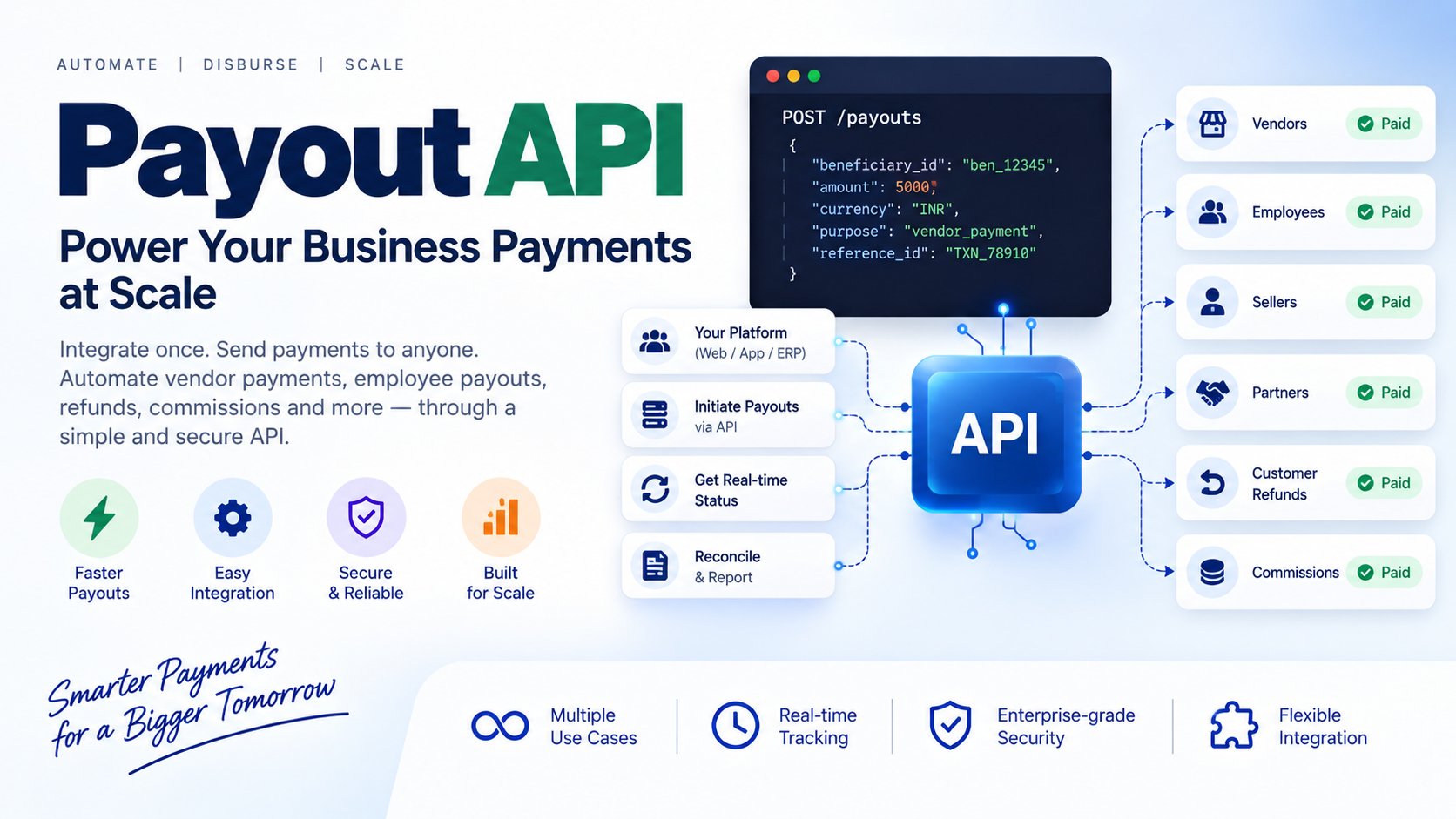
What Is a Payout API?
A Payout API (Application Programming Interface) allows a business application to communicate with a payment or banking system and initiate payouts electronic...
Read more