
 Rewards
IMPS vs NEFT vs RTGS: Difference, Limits, Charges & Which One Is Best?
When transferring money in India, you may come across three common payment methods: IMPS, NEFT and RTGS . While all three allow you to transfer money electron...
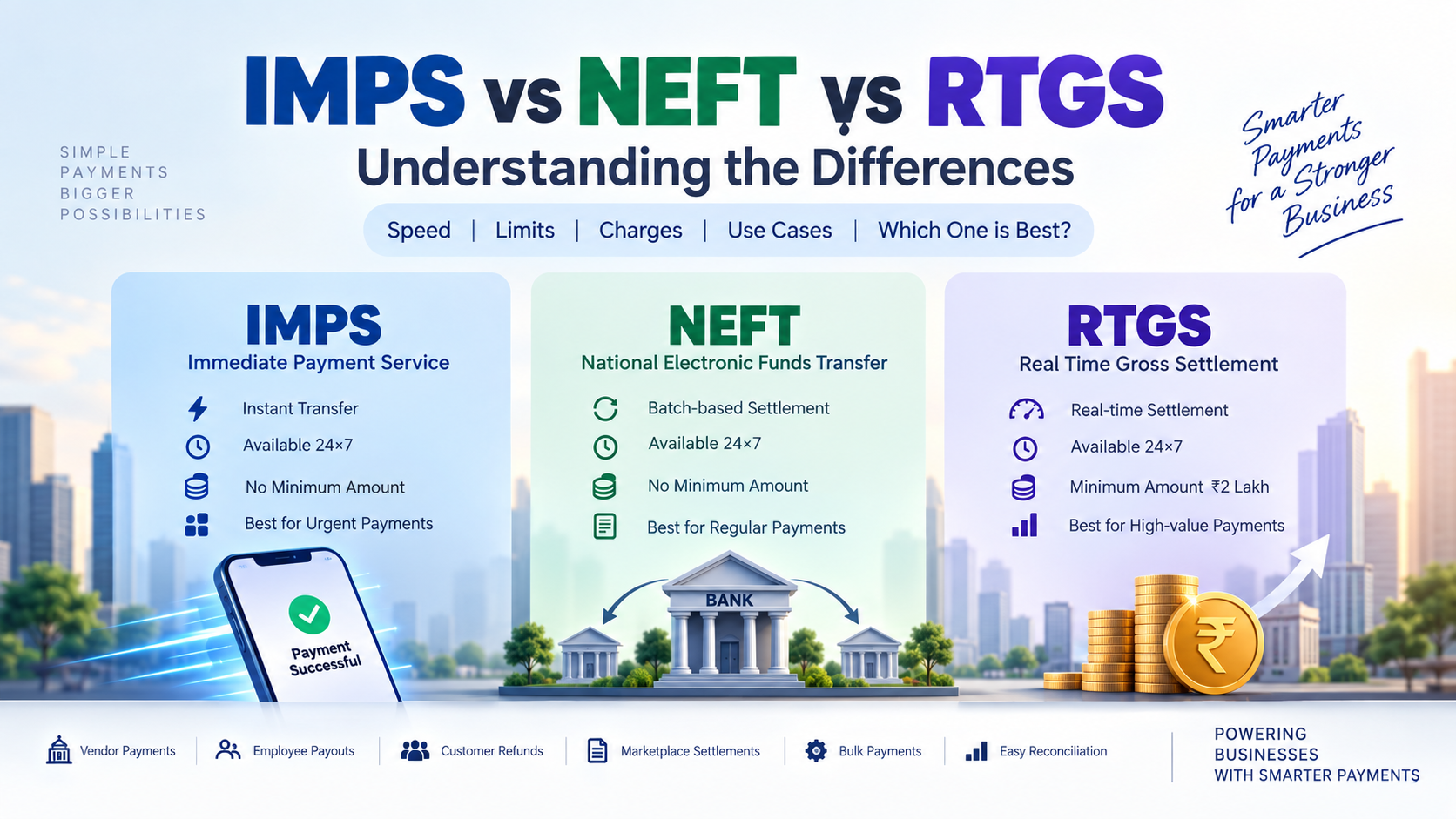
When transferring money in India, you may come across three common payment methods: IMPS, NEFT and RTGS.
While all three allow you to transfer money electronically between bank accounts, they differ in terms of speed, transaction limits, settlement mechanism and ideal use cases.
So, which one should you use?
In this guide, we explain IMPS vs NEFT vs RTGS in simple terms and help you understand which payment method is suitable for different types of transactions.
What Is the Difference Between IMPS, NEFT and RTGS?
The simplest way to understand them is:
IMPS: Best when you need an immediate bank transfer.
NEFT: Best for regular or routine bank transfers.
RTGS: Best for high-value transfers requiring real-time settlement.
Let's understand each payment method in detail.
What Is IMPS?
IMPS stands for Immediate Payment Service.
It is an electronic payment system that enables customers to transfer money between bank accounts instantly. IMPS is available 24×7, including weekends and bank holidays.
IMPS is commonly used when the recipient needs the money quickly.
Key Features of IMPS
Instant fund transfer
Available 24×7
No minimum transaction amount
Maximum limit can depend on the bank and channel
Suitable for urgent payments
Useful for business payouts and refunds
For businesses, IMPS can be particularly useful for time-sensitive payouts, customer refunds, employee payments and partner settlements.
What Is NEFT?
NEFT stands for National Electronic Funds Transfer.
NEFT is one of the most widely used electronic fund-transfer systems in India. It allows customers to transfer money between bank accounts and is available 24×7 throughout the year.
Unlike an immediate individual settlement system, NEFT operates through a batch-based settlement mechanism.
Key Features of NEFT
Available 24×7
No RBI-prescribed minimum transaction amount
Suitable for regular payments
Useful for vendor and supplier payments
Appropriate for routine business transactions
NEFT can be a good option when a payment is important but does not require immediate settlement.
What Is RTGS?
RTGS stands for Real Time Gross Settlement.
RTGS is primarily designed for high-value transactions.
"Real Time" means transactions are processed without waiting for a batch, while "Gross Settlement" means each transaction is settled individually.
RTGS is available 24×7.
Key Features of RTGS
Real-time settlement
Available 24×7
Minimum transaction amount of ₹2 lakh
Suitable for high-value transactions
Useful for corporate and business payments
For example, a business making a large-value payment to a supplier may choose RTGS when immediate settlement is important.
IMPS vs NEFT vs RTGS: Comparison
FeatureIMPSNEFTRTGSFull FormImmediate Payment ServiceNational Electronic Funds TransferReal Time Gross SettlementSpeedImmediateBatch-based settlementReal timeAvailability24×724×724×7Minimum AmountNo minimum generallyNo RBI minimum₹2 lakhBest ForUrgent paymentsRoutine paymentsHigh-value paymentsSettlementImmediateDeferred/batch settlementIndividual settlementCommon Business UsePayouts & refundsVendor paymentsLarge-value payments
Transaction limits and charges may vary by bank and channel.
IMPS vs NEFT: What's the Difference?
The biggest difference between IMPS and NEFT is the speed and settlement mechanism.
IMPS is designed for immediate transfers, making it useful when money needs to reach the beneficiary quickly.
NEFT is better suited for routine transactions where immediate settlement isn't necessarily required.
Choose IMPS when:
The payment is urgent
You need immediate transfer
You are processing a customer refund
You are making an urgent payout
Choose NEFT when:
The payment is routine
You are paying vendors or suppliers
Immediate settlement isn't essential
You are making regular business transfers
NEFT vs RTGS: What's the Difference?
The major difference between NEFT and RTGS is the settlement mechanism and typical transaction value.
NEFT is commonly used for routine transfers, while RTGS is designed primarily for high-value transactions that require real-time individual settlement.
Choose NEFT when:
Routine + Regular + Flexible
Choose RTGS when:
High Value + Real Time + Immediate Settlement
IMPS vs RTGS: What's the Difference?
IMPS and RTGS both provide fast electronic transfers, but they target different transaction requirements.
IMPS is generally suited to retail and business transfers where immediate payment is required.
RTGS is primarily intended for high-value transactions, with a minimum transaction amount of ₹2 lakh.
Therefore:
Small/medium urgent payment → IMPS
High-value urgent payment → RTGS
Which Is Better: IMPS, NEFT or RTGS?
There is no single payment method that is best for everyone.
Your choice should depend on transaction value, urgency and business requirements.
For instant payments → IMPS
Use IMPS when speed is your priority.
For regular payments → NEFT
Use NEFT when you're making routine payments and don't necessarily need immediate settlement.
For high-value payments → RTGS
Use RTGS when you're transferring ₹2 lakh or more and require real-time settlement.
IMPS, NEFT and RTGS for Businesses
For businesses, choosing a payment rail is only one part of the payment process.
A business may need to manage:
Vendor payments
Employee payouts
Customer refunds
Partner settlements
Marketplace payouts
Bulk transfers
Failed transactions
Payment reconciliation
Transaction reporting
As payment volumes grow, manually managing these activities can become time-consuming.
This is where payment automation and centralized payout infrastructure become important.
With a platform such as Budgetree, businesses can build more structured payment workflows and simplify the management of business payouts and payment operations.
Frequently Asked Questions
Is IMPS faster than NEFT?
Yes. IMPS is designed for immediate fund transfers, while NEFT uses a batch-based settlement mechanism.
Is NEFT available 24×7?
Yes. NEFT is available 24×7, including weekends and bank holidays.
What is the minimum amount for RTGS?
The minimum RTGS transaction amount is ₹2 lakh.
Which is better for urgent payments: IMPS or NEFT?
For an urgent payment where immediate transfer is required, IMPS is generally more suitable.
Which is better for high-value transactions?
RTGS is designed primarily for high-value transactions requiring real-time settlement.
Can businesses use IMPS, NEFT and RTGS?
Yes. Businesses can use different payment rails depending on the transaction amount, urgency and payment requirements.
For individuals, choosing between them is usually straightforward. For businesses processing large numbers of transactions, the bigger challenge is managing the entire payment lifecycle—from initiation and processing to tracking, reconciliation and reporting.
That's where the right payment infrastructure can help businesses make their payment operations more efficient and scalable.
Budgetree helps businesses simplify and manage their payment operations, enabling smoother payouts and streamlined financial workflows.
Ready to transform your rewards & engagement program?
See how Budgetree helps teams launch, automate, and measure engagement at scale.
Continue reading
More insights from the Budgetree team
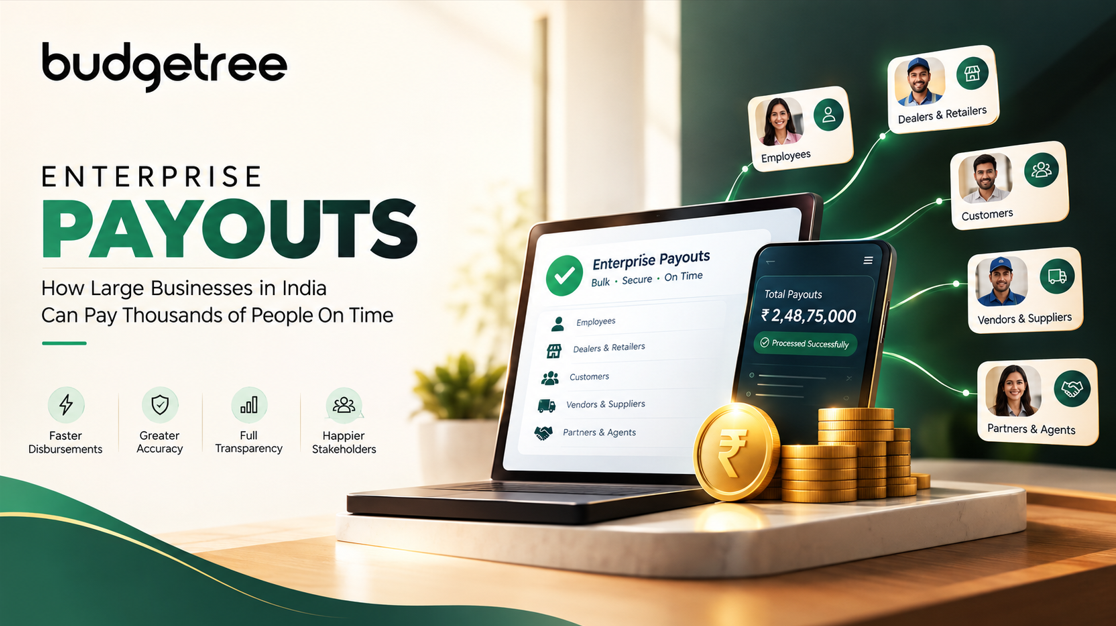
Enterprise Payouts in India: A Simple Guide | Budgetree
Budgetree helps large businesses automate bulk payouts via UPI, IMPS and NEFT with real-time tracking, easy reconciliation and audit-ready records, all from one platform.
Read more
UPI MDR 2026 Explained: The Complete Guide for Merchants and Businesses
NPCI's new 0.4% UPI MDR takes effect 15 October 2026 on merchant payments above ₹2,000, capped at ₹300. Consumers and small merchants stay exempt - here's what businesses must know before the deadline.
Read more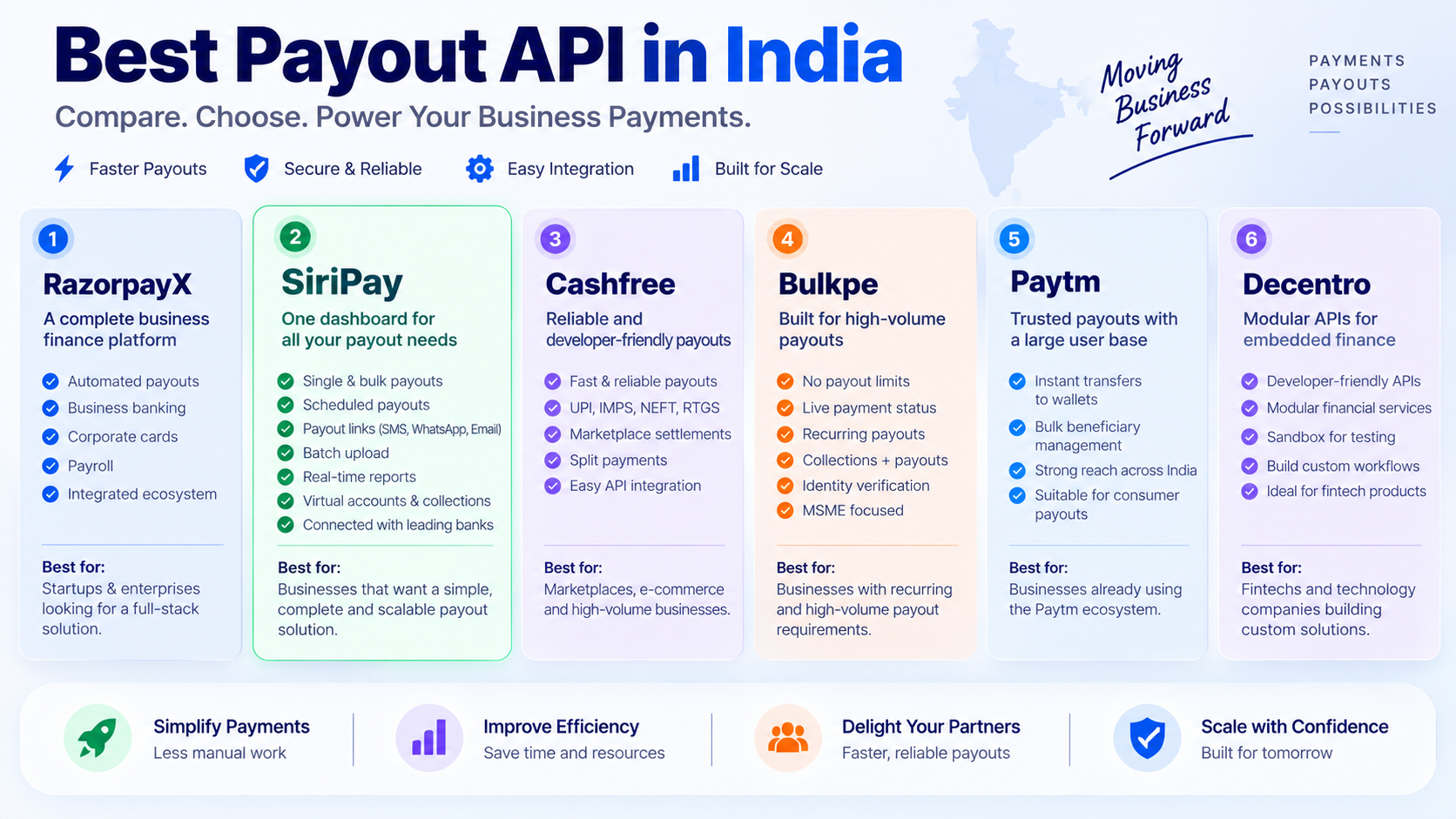
Best Payout APIs in India: RazorpayX, SiriPay, Cashfree, Bulkpe, Paytm & Decentro
Over the last few years, businesses in India have moved from manual payments to automated payouts. For NBFCs, marketplaces, logistics companies, e-commerce bu...
Read more