
 Rewards
What Is UPI? How Unified Payments Interface Works in India
UPI, or Unified Payments Interface, has changed the way India sends and receives money. From paying at a local store to making online purchases, transferring ...
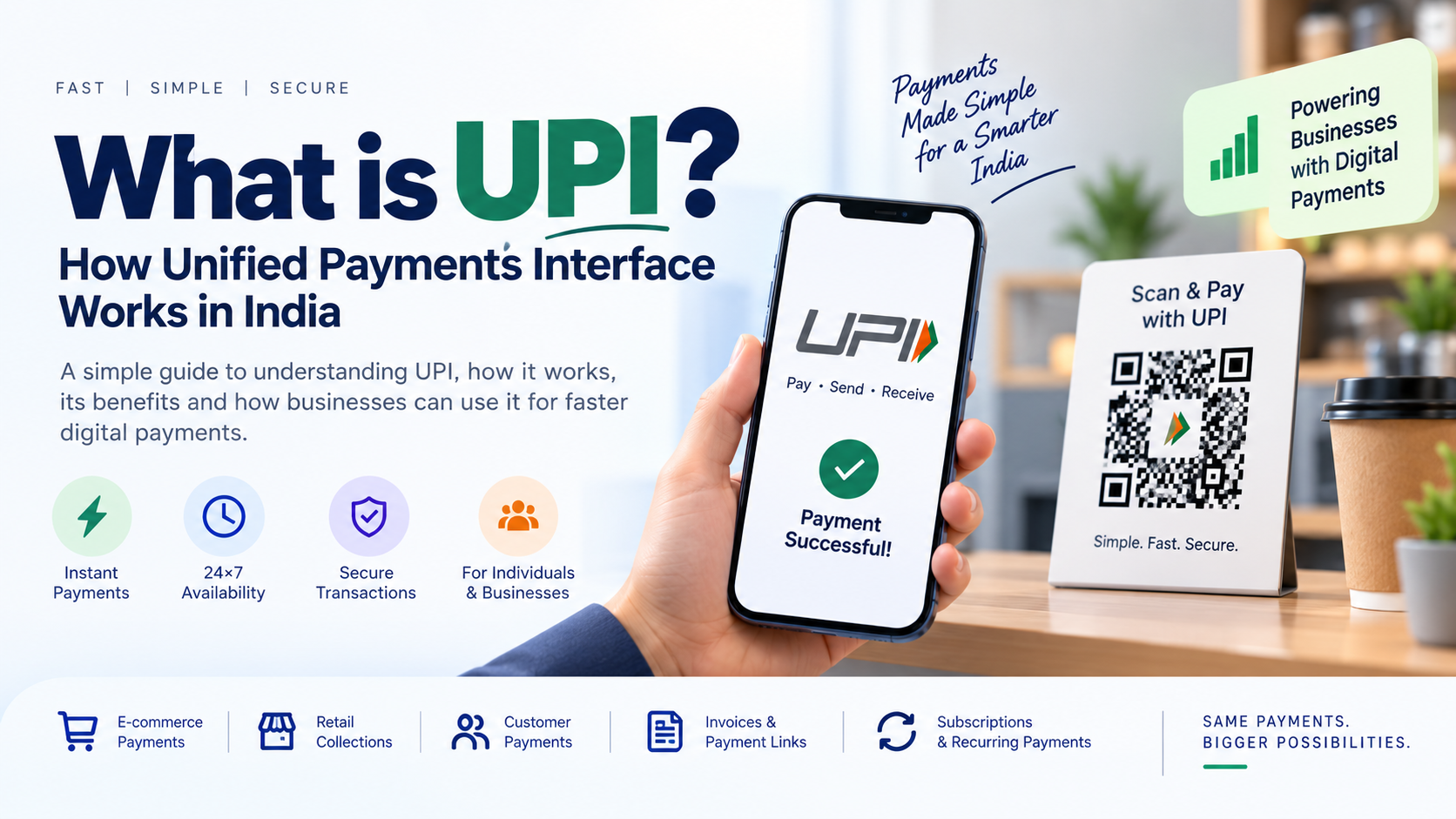
UPI, or Unified Payments Interface, has changed the way India sends and receives money.
From paying at a local store to making online purchases, transferring money to friends, receiving payments from customers, and managing business transactions, UPI has become an important part of India's digital payment ecosystem.
But what exactly is UPI, how does it work, and why has it become so important for businesses?
Let's understand UPI in simple terms.
What Is UPI?
UPI stands for Unified Payments Interface.
It is an instant payment system developed by the National Payments Corporation of India (NPCI) that enables users to transfer money directly between bank accounts through a mobile device.
Instead of entering lengthy bank account details every time, users can make payments using identifiers such as a UPI ID, QR code, mobile number or other supported methods.
For consumers, this makes payments quick and convenient.
For businesses, UPI provides a digital way to collect payments, receive money from customers and build smoother payment experiences.
How Does UPI Work?
A UPI transaction connects the customer's bank account with the recipient's bank account through the UPI ecosystem.
A simplified UPI payment flow looks like this:
Customer → UPI App → UPI Infrastructure → Bank → Merchant
For example, imagine a customer purchasing a product online.
Step 1: Customer Selects UPI
The customer chooses UPI as the payment option at checkout.
Step 2: Payment Request Is Created
The merchant generates a payment request containing the relevant transaction information.
Step 3: Customer Authorises the Payment
The customer completes the payment through their UPI app and authorises the transaction using the required authentication method.
Step 4: Banks Process the Transaction
The UPI ecosystem routes the transaction between the customer's bank and the merchant's bank.
Step 5: Payment Confirmation
The transaction status is returned to the relevant parties, allowing the merchant to confirm whether the payment was successful.
This entire process can happen within seconds.
Key Features of UPI
UPI offers several features that make digital payments convenient.
1. Instant Payments
UPI enables near-instant account-to-account payments, making it useful for both online and offline transactions.
2. 24×7 Availability
UPI payments can generally be initiated at any time, including weekends and holidays.
3. QR Code Payments
Customers can scan a QR code and complete a payment without manually entering bank details.
4. UPI IDs
A UPI ID can make receiving payments easier without sharing traditional bank-account information with every payer.
5. Multiple Payment Apps
Users can access UPI through various participating apps and banking applications.
6. Account-to-Account Payments
UPI enables payments directly from the customer's bank account to the recipient's bank account.
Why Is UPI So Popular in India?
The biggest strength of UPI is simplicity.
Traditional payment processes can involve entering account numbers, IFSC codes, card details or other information.
With UPI, a customer can often complete a payment using:
Open App → Scan/Select UPI → Authorise → Payment Complete
This low-friction experience has helped UPI become an important part of India's digital payment ecosystem.
UPI for Businesses
UPI isn't only useful for consumers.
Businesses can use UPI across multiple payment scenarios.
Online Payments
E-commerce businesses can offer UPI as a payment option during checkout.
Retail Payments
Physical stores can accept payments using UPI QR codes.
Customer Collections
Businesses can use UPI to collect money from customers quickly and conveniently.
Invoices and Payment Links
Businesses can provide customers with digital payment options connected to invoices or payment requests.
Subscription and Recurring Payments
Businesses can use supported UPI capabilities for recurring payment experiences where applicable.
Benefits of UPI for Businesses
Faster Payment Collection
Customers can make payments directly from their bank accounts without entering card information.
Better Customer Experience
A simple payment journey can reduce friction during checkout.
Digital Payment Tracking
Businesses can integrate payment systems with their technology stack to track transactions and payment status.
Lower Operational Complexity
Digital payment workflows can reduce dependence on manual payment collection processes.
Scalable Payments
UPI can support businesses ranging from small retailers to large digital platforms.
UPI and Business Payment Automation
As a business grows, accepting payments is only one part of the problem.
Businesses also need to manage:
Payment collection
Transaction status
Failed payments
Refunds
Reconciliation
Settlement reporting
Customer records
Payment analytics
Managing these processes manually can become difficult as transaction volumes increase.
This is where payment automation becomes important.
With a platform such as Budgetree, businesses can build more structured digital payment workflows and connect payment activity with their broader business operations.
The objective isn't simply to accept a UPI payment.
It is to make the entire payment lifecycle easier to manage.
UPI vs Traditional Payment Methods
One reason UPI has become popular is that it reduces friction.
A traditional digital payment journey may require customers to enter multiple details.
With UPI, customers can often complete the payment using a UPI ID, QR code or supported payment flow.
This makes UPI particularly useful for:
E-commerce
Retail
Food delivery
Travel
Subscription businesses
Marketplaces
Education
Service businesses
Is UPI Safe?
UPI transactions use authentication mechanisms designed to protect users and their bank accounts.
However, users should still follow basic security practices.
Never share your UPI PIN with anyone.
A UPI PIN is generally required to authorise a payment, not to receive money.
Users should also verify the recipient and transaction amount before approving a payment.
Businesses should similarly implement appropriate security, authentication, monitoring and reconciliation controls around their payment systems.
The Future of UPI
UPI has evolved beyond simple person-to-person transfers.
Its ecosystem continues to support new payment experiences across commerce, businesses and digital financial services.
For businesses, this means UPI can become more than just another checkout option.
It can become part of a broader digital payment infrastructure connecting customer payments, transaction processing, reconciliation and business workflows.
Frequently Asked Questions About UPI
What does UPI stand for?
UPI stands for Unified Payments Interface.
What is UPI used for?
UPI is used for digital payments and bank-account transfers, including online purchases, QR-code payments, peer-to-peer transfers and business collections.
How does UPI work?
UPI connects participating banks and payment applications to enable account-to-account digital payments through a unified payment infrastructure.
Is UPI available 24×7?
Yes. UPI is designed to operate around the clock.
Can businesses accept UPI payments?
Yes. Businesses can accept UPI through methods such as QR codes, payment interfaces and other supported payment solutions.
Is UPI only for small payments?
No. UPI is used across a wide range of consumer and business payment use cases, subject to applicable transaction limits and rules.
Conclusion
UPI has fundamentally simplified digital payments in India.
Instead of relying on complicated payment processes, customers can make digital payments using simple experiences such as UPI IDs and QR codes.
For businesses, however, accepting UPI is only the beginning.
The real opportunity lies in creating a payment ecosystem where collections, transactions, refunds, reconciliation and reporting work together seamlessly.
With Budgetree, businesses can move towards smarter and more streamlined payment operations.
Simple payments. Smarter business operations.
Ready to transform your rewards & engagement program?
See how Budgetree helps teams launch, automate, and measure engagement at scale.
Continue reading
More insights from the Budgetree team
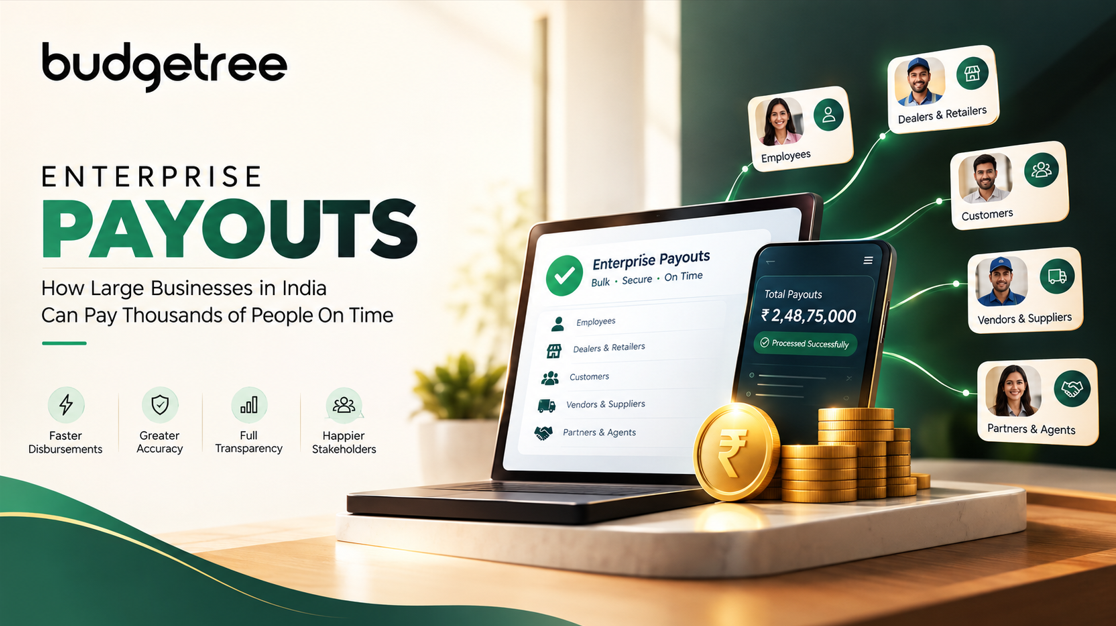
Enterprise Payouts in India: A Simple Guide | Budgetree
Budgetree helps large businesses automate bulk payouts via UPI, IMPS and NEFT with real-time tracking, easy reconciliation and audit-ready records, all from one platform.
Read more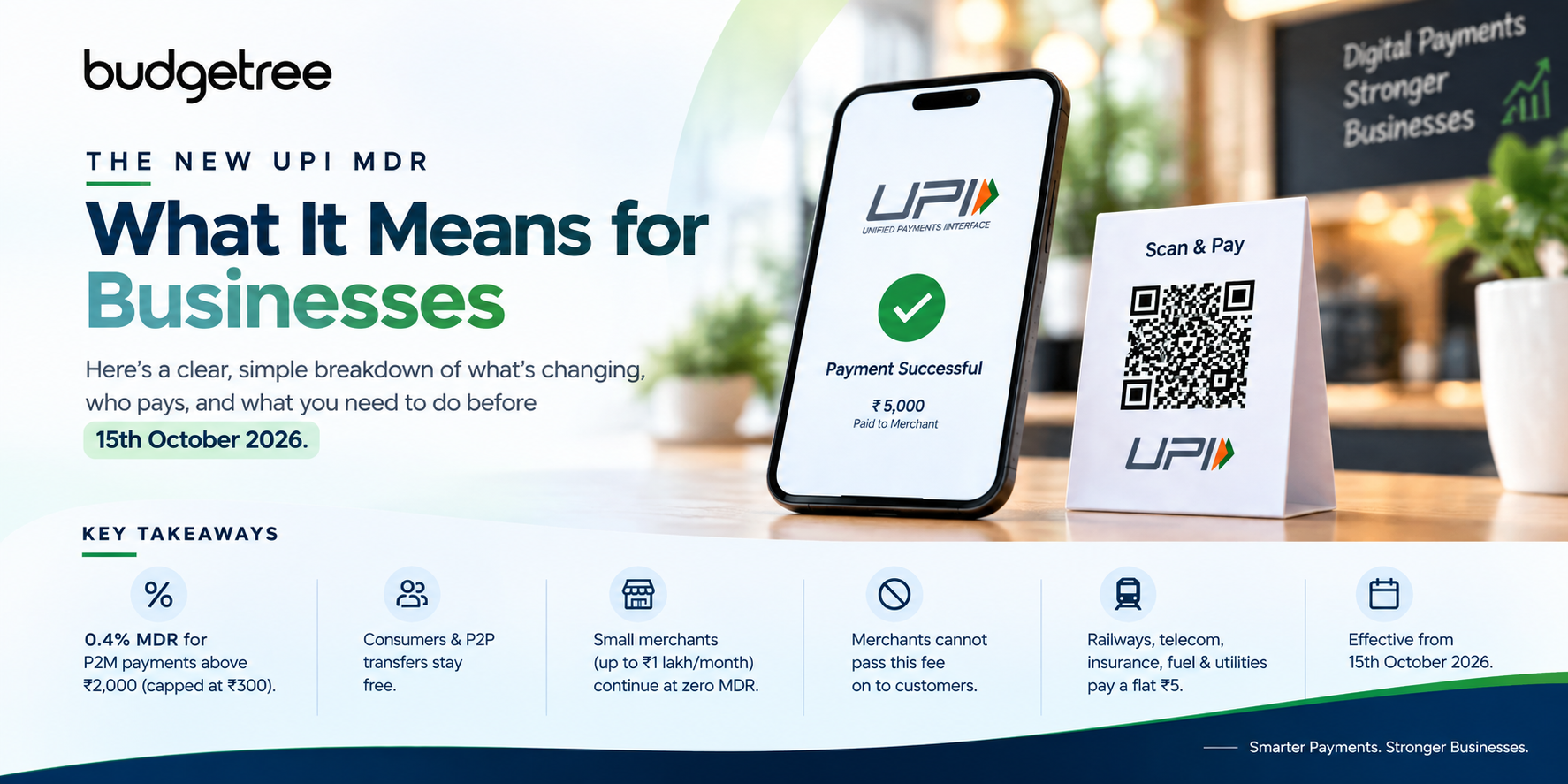
UPI MDR 2026 Explained: The Complete Guide for Merchants and Businesses
NPCI's new 0.4% UPI MDR takes effect 15 October 2026 on merchant payments above ₹2,000, capped at ₹300. Consumers and small merchants stay exempt - here's what businesses must know before the deadline.
Read more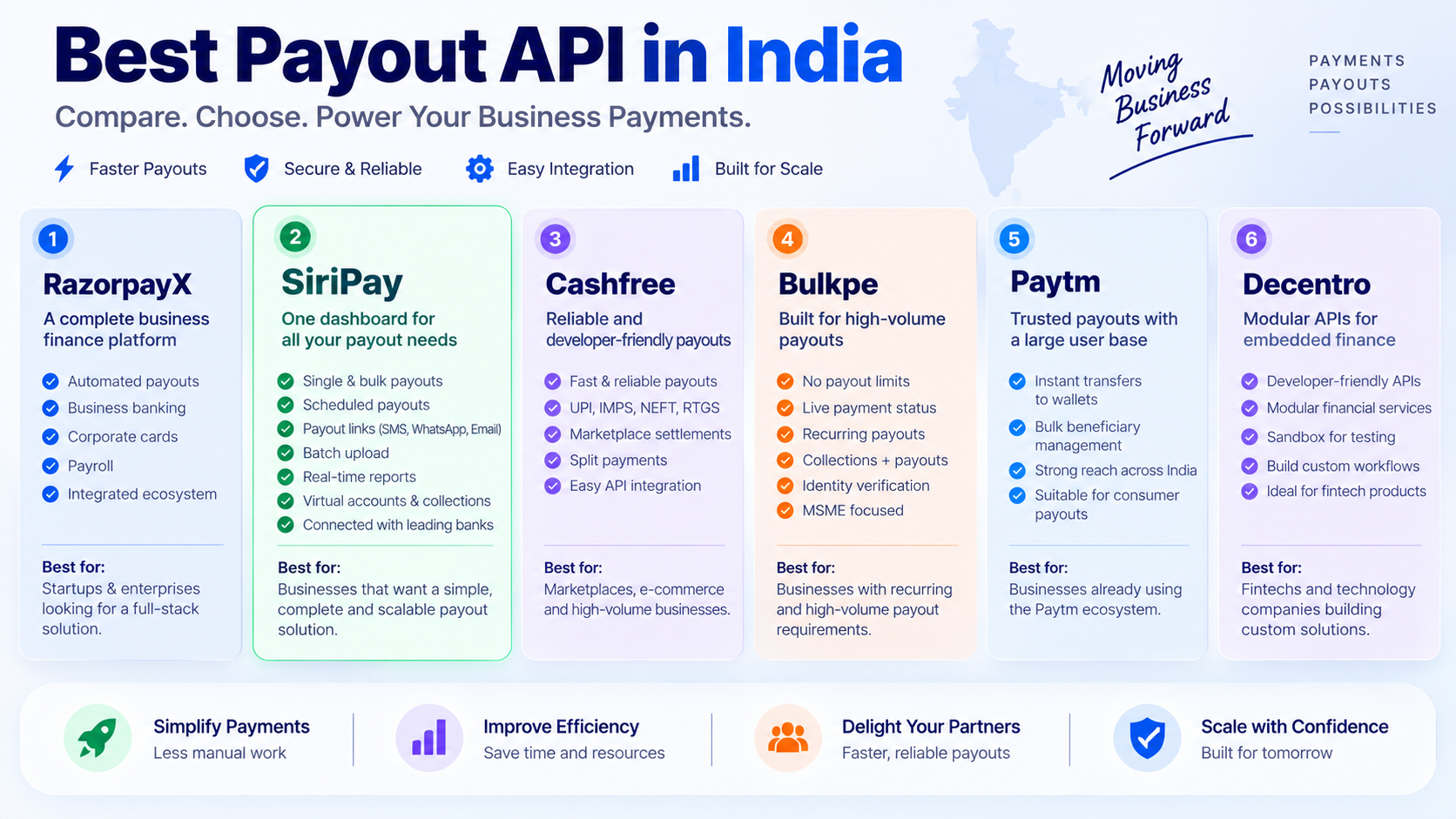
Best Payout APIs in India: RazorpayX, SiriPay, Cashfree, Bulkpe, Paytm & Decentro
Over the last few years, businesses in India have moved from manual payments to automated payouts. For NBFCs, marketplaces, logistics companies, e-commerce bu...
Read more